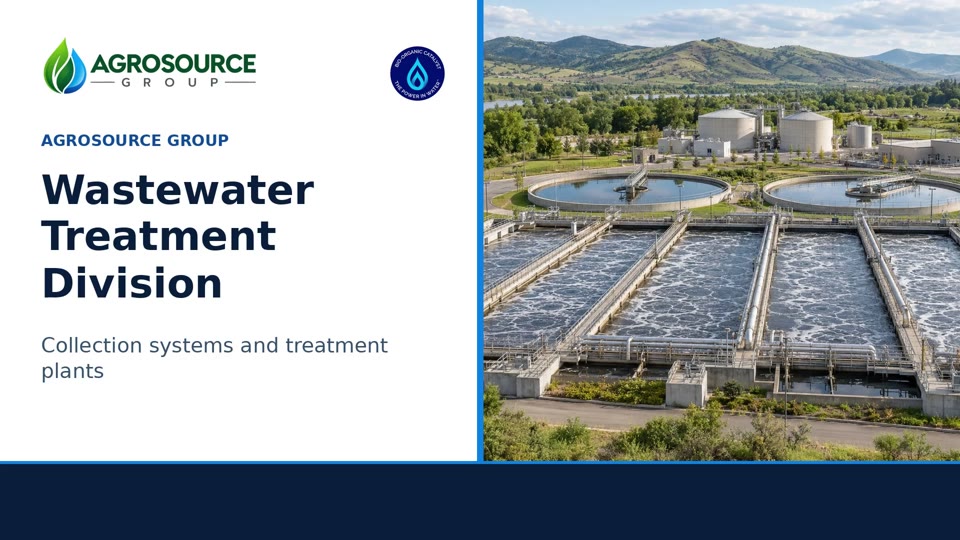
Sewer networks & lift stations
Eco-Cat
FOG, organic buildup and associated odors.
Repeat cleaning, organic odors and sludge handling put pressure on your crew and operating budget. Start with the cause, match the treatment to the process and build a measurable case for the change.
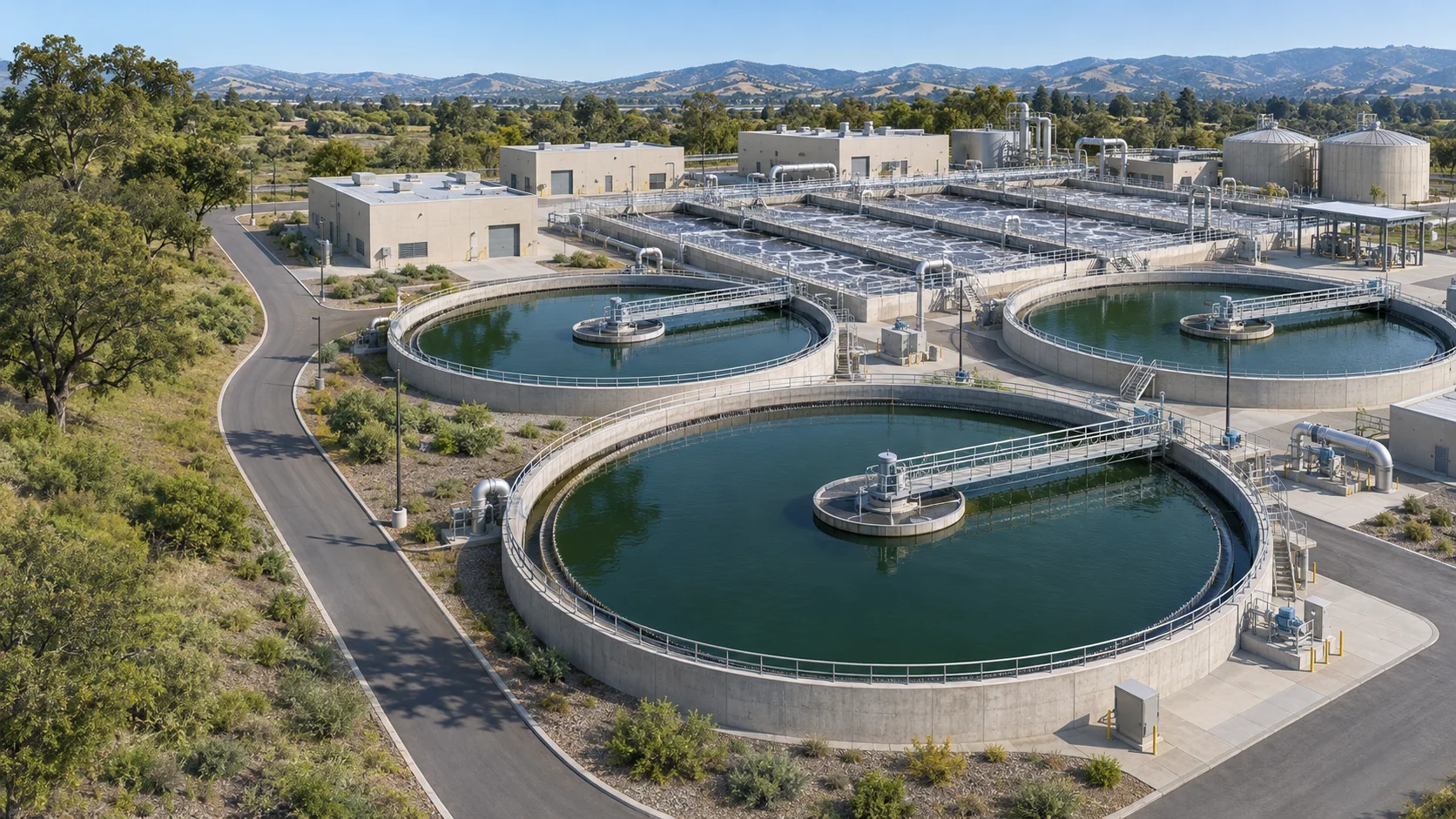
Bio-Organic Catalyst formulations work with existing biological processes, from collection networks to aerobic treatment and anaerobic digestion. Agrosource connects the right formulation with your treatment goals, operating conditions and injection program.
A treatment approach that follows the waste stream.
Eco-Cat
FOG, organic buildup and associated odors.
EcoSystem Plus
Oxygen transfer and organic-waste processing alongside aeration.
EcoSystem Plus
Organic-solids conversion in the anaerobic process.
Agrosource provides treatment design, product selection and injection-rate guidance.
Operators need a treatment that fits daily process control. Managers need evidence that the added cost and work are justified. Begin with the operating concern, baseline measurements and the result your team needs to evaluate.
Review Eco-Cat for FOG and collection-system odors. See the Balboa Island pump-station example.
Fats, oils and grease can complicate collection and biological treatment. Eco-Cat is formulated to make these organic wastes more available for biological breakdown; selection should account for incoming loads and the capacity of downstream treatment.
Collection-system odors often develop where organic waste accumulates under oxygen-poor conditions. Eco-Cat targets the organic waste and associated odors; Eccomate serves localized waste-handling odor points, while EcoSystem Plus supports the wastewater treatment process. Track odor patterns and operating conditions, with gas monitoring retained where required.
Review EcoSystem Plus for aeration and sludge-management applications; match residuals treatment to the material and process.
Aerobic treatment depends on moving oxygen into the water and matching that supply to incoming demand. EcoSystem Plus is formulated to support oxygen transfer and biological oxidation alongside aeration. It is not an oxygen generator or a substitute for adequate aeration capacity; track DO with BOD, COD and operating conditions.
Accumulated organic solids can reduce working capacity and complicate residuals handling. EcoSystem Plus supports organic-solids breakdown and sludge management, while Eco-Cat addresses FOG-rich residues. Track solids and handling needs, and retain screening, separation and planned removal of material that treatment cannot break down.
Eco-Cat can help address ammonia (NH₃) and hydrogen sulfide (H₂S) odors in suitable wastewater and sludge applications. Manufacturer-reported testing includes reduced airborne ammonia above treated wastewater sludge. Results depend on the waste stream, treatment delivery and operating conditions. Reduced odor does not establish safe gas levels; retain gas monitoring and safety controls.
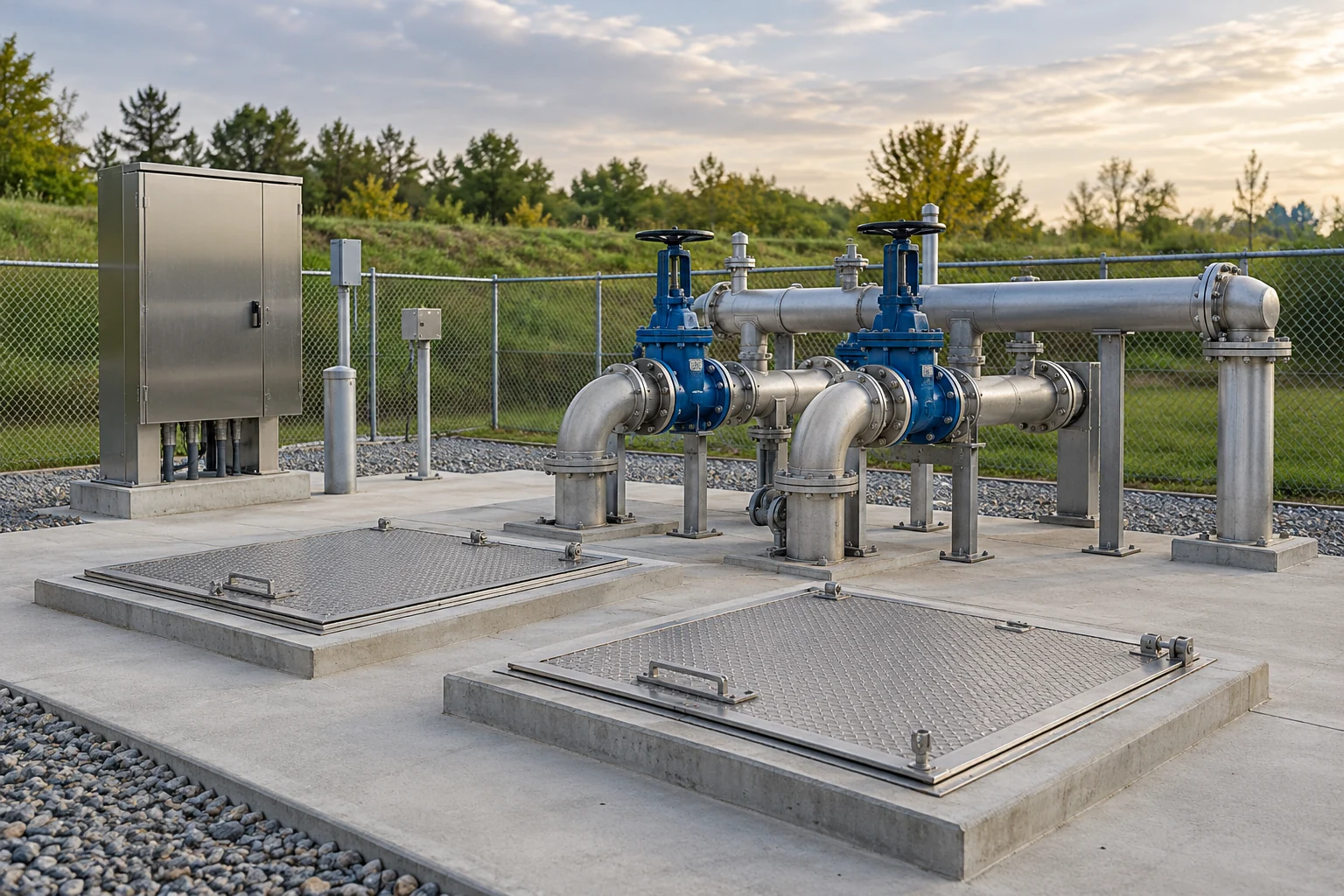
Product performance is only part of the decision. Define the process fit, implementation requirements and evidence needed to judge the total operating value.
Review dosing access, residence time, aeration, incoming loads and compatibility. Define who will apply and monitor treatment without removing required process or safety controls.
Consider product use, labor, cleaning, energy and residuals handling where relevant. Use your facility’s baseline and actual costs rather than assuming another site’s savings will apply.
Choose relevant measures such as cleaning frequency, loading, DO or solids, document operating conditions and review the response. Agree on what would justify continuing or changing the program.
BOD (biochemical oxygen demand) describes oxygen used by microorganisms as they break down material in a water sample. COD (chemical oxygen demand) measures the oxygen equivalent of material oxidized in a chemical test. These describe oxygen demand, not the dissolved oxygen (DO) available in the water; interpret them alongside flow, solids and operating conditions.
Review BOD, COD, flow and solids together to understand what reaches the collection and treatment system. Compare those loads with DO and process capacity before selecting a treatment program, and use repeat measurements to assess change rather than assuming clearer water means lower demand.
Ammonia (NH₃) and hydrogen sulfide (H₂S) can be released from wastewater and residuals. An odor-treatment program is not a safety-control system. Odor reduction does not establish safe gas levels or guarantee emissions reductions. Retain gas monitoring, ventilation and all facility safety procedures; follow current product labels and safety directions.
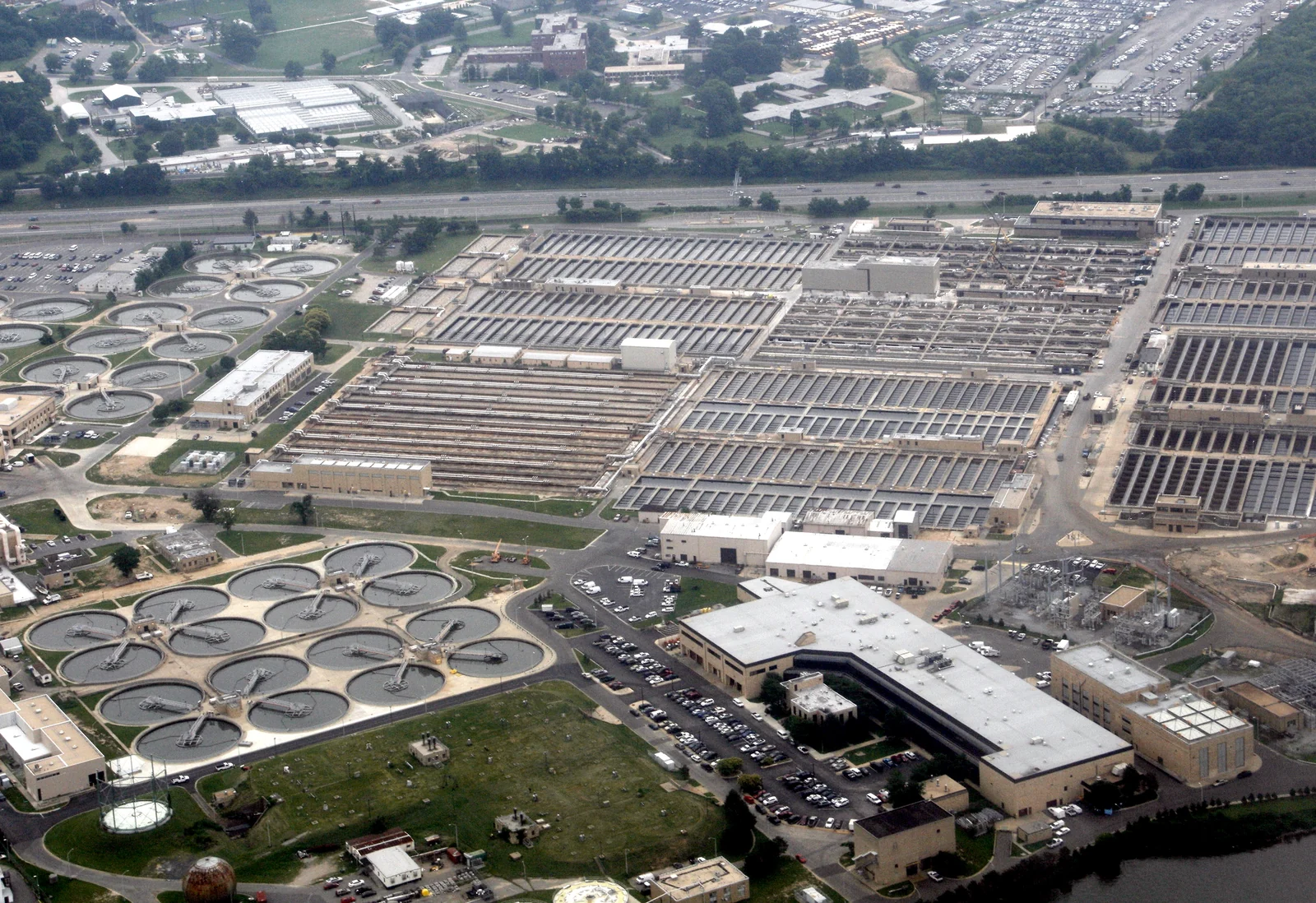
Select each product for its treatment role and follow its current directions. Confirm compatibility before combining products.
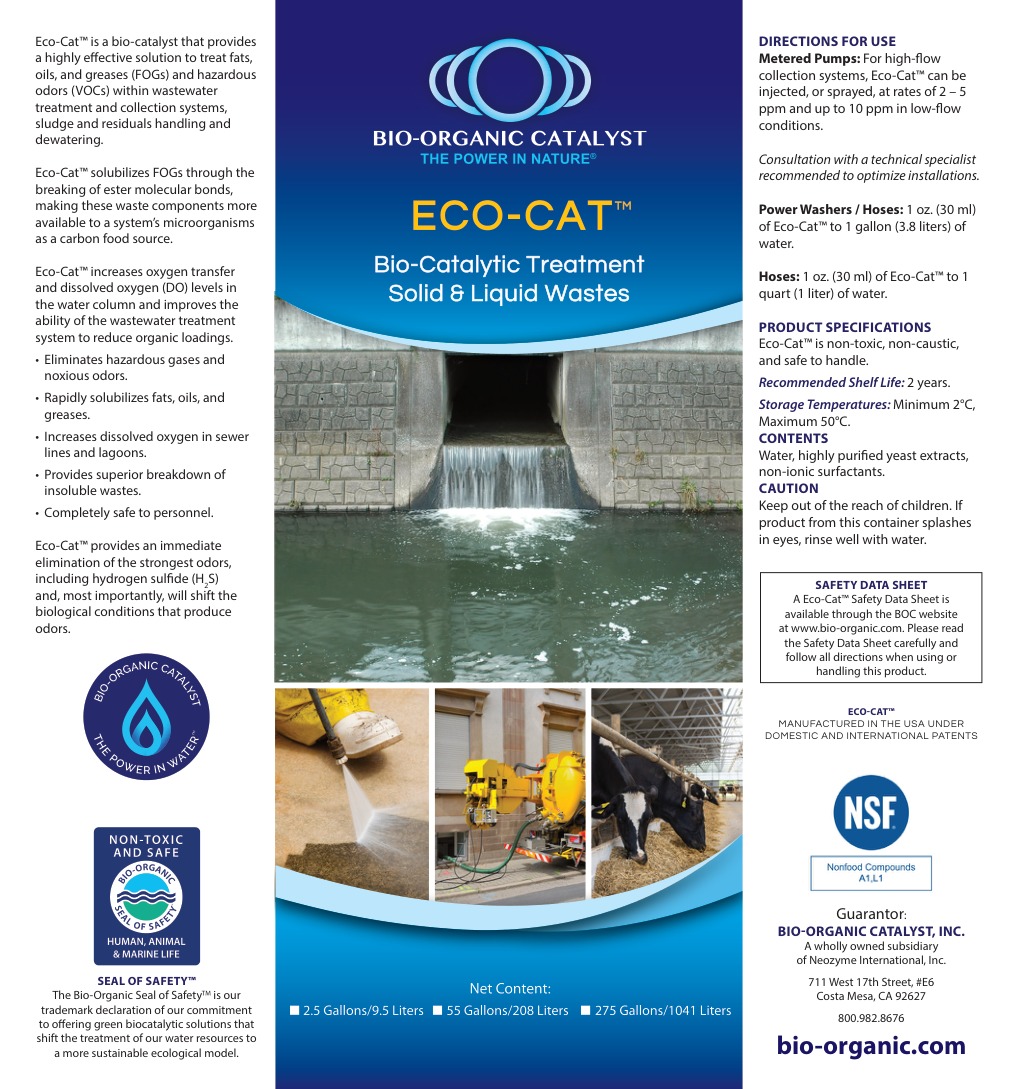
Eco-Cat treats fats, oils and grease (FOG), organic buildup and associated odors in wastewater collection systems, lift stations and waste-handling operations. It solubilizes organic wastes to make them more available for biological breakdown.
Explore Eco-CatEcoSystem Plus supports oxygen transfer, organic-waste breakdown and sludge management in wastewater treatment. Its aerobic-treatment and anaerobic-digestion applications have different dosing and monitoring requirements, matched to the process and incoming load.
Explore EcoSystem PlusEccomate targets organic odors in compost, food waste, biosolids and other waste-handling areas. Spray and misting applications deliver the product to the odor source for organic-odor and VOC control.
Explore EccomateNeed help matching treatment to your wastewater problem?
Ask about wastewater treatment optionsExplore product options, current labels and application directions for your system.
Explore products for wastewater, lift stations and organic-odor management. Contact Agrosource Group for product information, availability and application directions.
Explore productsFollow the problem to the most relevant technical approach.
Support organic-waste breakdown, oxygen transfer and solids management with the Bio-Organic Catalyst product matched to the treatment process.
Explore Bio-Catalytic Water & Waste TreatmentTreat FOG and organic buildup with Eco-Cat, organic-waste odors with Eccomate, and wastewater loading and sludge with EcoSystem Plus.
Explore Odor, FOG & Organic LoadingProduct literature, application examples and technical resources.
Ammonia and hydrogen sulfide odor-treatment references: Eco-Cat wastewater-sludge air testing (PDF) and Eccomate odor-management guidance. Reported study results apply to the tested conditions and do not guarantee performance at another facility.

Bio-Organic Catalyst presents Eco-Cat use at a Balboa Island pump station, providing a site-specific application example.
Read summary & source notesSource: Bio-Organic Catalyst.
Share the process layout, recurring problem, current treatment and available flow, loading and solids records. We’ll help identify the product fit and a practical way to evaluate performance and operating cost.