Problem & treatmentCollection-system FOG and odors
Grease and organic deposits in collection systems and lift stations can restrict flow and create odors. Eco-Cat treats FOG and organic buildup by making these wastes more available for biological breakdown. Match dosing access and residence time to the accumulation point, and track grease deposits and cleaning demand.
Problem & treatmentWastewater oxygen-transfer and organic loading
Changing BOD and COD loads increase demand on aeration and biological treatment. EcoSystem Plus supports oxygen transfer and organic-waste processing within the aerated stage, with dissolved oxygen, loading and solids used to guide treatment. It does not create oxygen or replace adequate aeration and process controls.
Problem & treatmentBiosolids/dewatering odor
Dewatering, storage and transfer expose localized biosolids odor sources. Eccomate targets those organic odors through spray or misting applications suited to the handling point. Maintain ventilation and exposure controls independently of odor observations.
Problem & treatmentManaged non-potable water-body quality
Organic accumulation can cloud managed ponds and foul wetted surfaces. Clear-Cat supports organic-matter breakdown and biological-film management in suitable non-potable water bodies, alongside aeration and circulation. Clarity and dissolved oxygen help track response; clearer water alone does not establish water safety.
Problem & treatmentSludge and organic-solids handling
Settled organic solids increase handling and disposal demands. EcoSystem Plus supports biological processing of organic solids and sludge management in the appropriate wastewater stage. Check solids measurements and handling requirements, and retain necessary separation and removal.
Problem & treatmentHydrogen sulfide in collection systems
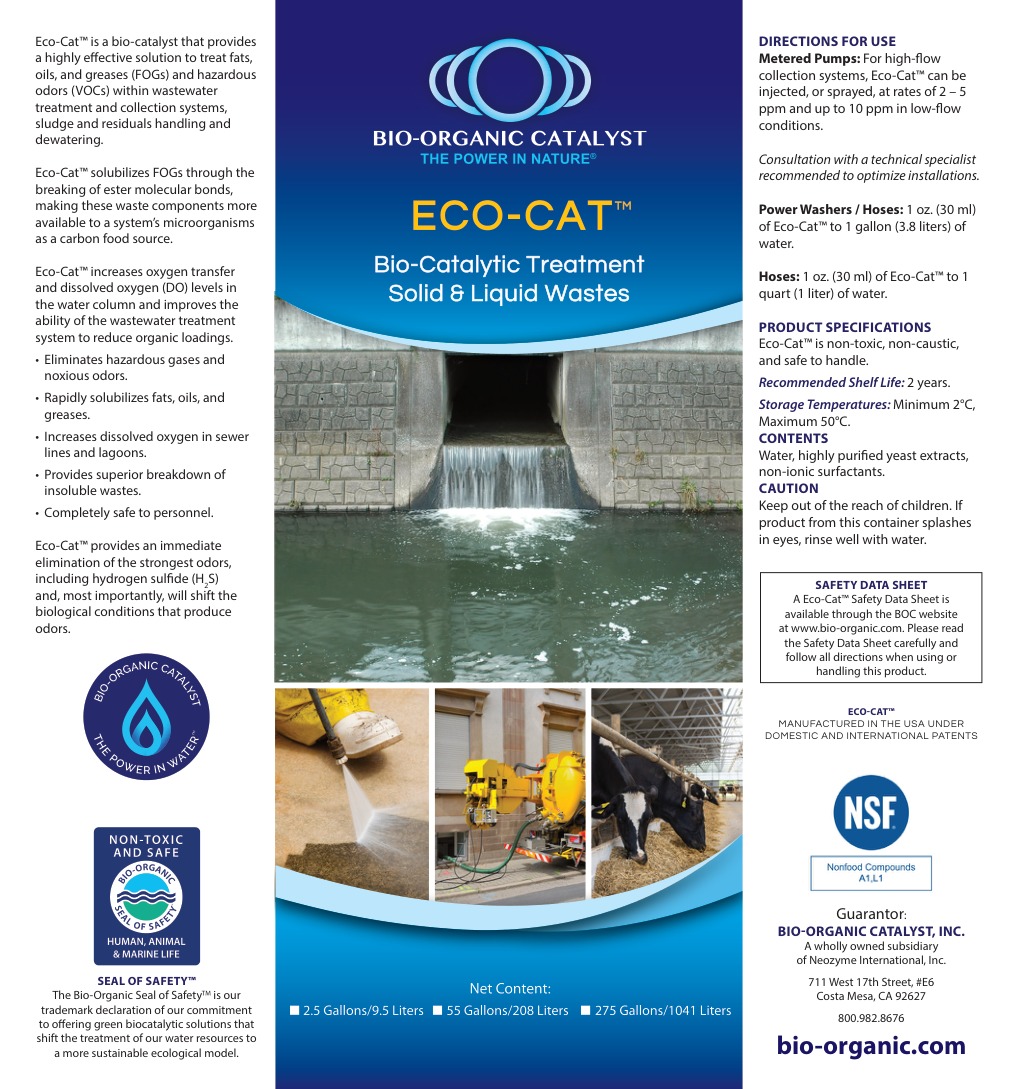
Oxygen-poor collection conditions can produce hydrogen sulfide (H₂S). Eco-Cat’s wastewater label identifies H₂S-related odor treatment, addressing organic waste and odor-producing conditions. Odor improvement cannot establish safe gas concentrations; retain required monitoring, ventilation and worker-protection procedures.