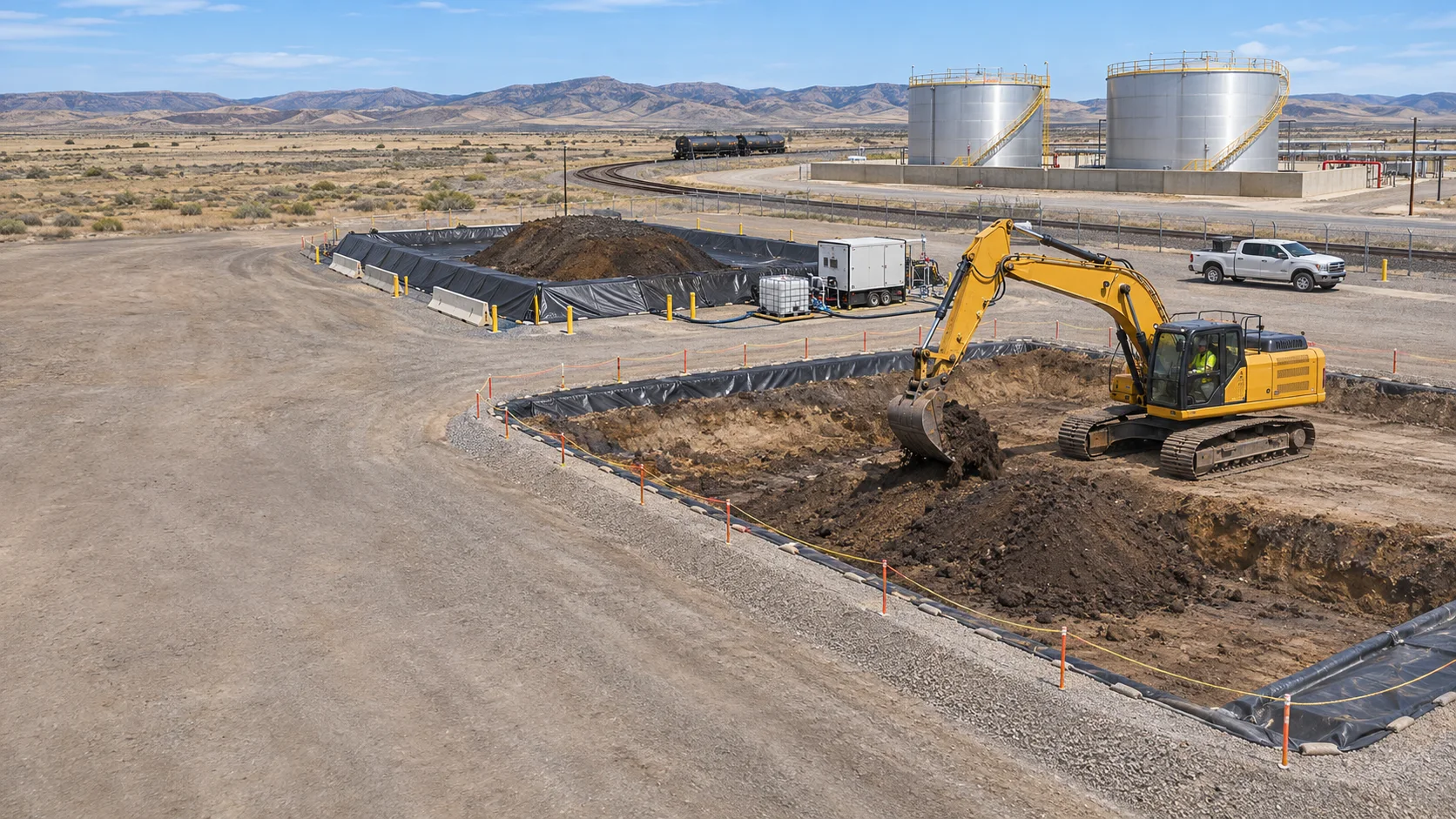
Soil: define the affected area
Identify the oil or fuel, delineate the impacted soil and recover free product where feasible. Decide what to remove and what to treat under the site cleanup plan.

Recover free oil, remove residual contamination and verify the results against your cleanup plan. Manage petroleum-affected water in an approved contained treatment system.
Agrosource Group
An overview of the Agrosource Group Oil & Gas Division and its hydrocarbon remediation work.
Identify the oil or fuel, delineate the impacted soil and recover free product where feasible. Decide what to remove and what to treat under the site cleanup plan.
Recover floating oil where present, hold petroleum-affected water in a contained treatment system and verify the treated water against applicable project requirements.
Recover pooled petroleum first. Loosen the remaining residue from concrete or equipment, protect nearby drains and collect the residue and wash water.
Tell us what you need to clean up and how the material is contained.
Discuss your remediation projectUse the project’s sampling plan and cleanup criteria to verify the result. A cleaner-looking surface or clearer water does not establish that the applicable criteria were met.
Follow the product label and safety data sheet. Keep the product out of surface waters and drains, and follow site-specific containment, handling and discharge requirements.
Share the material, available equipment and cleanup target.
Get help planning the cleanupThe evidence covers different settings: a controlled JP-7 soil test, a Colombian industrial project involving retained LPG tank test water treated with NONTOX® and aeration, and a peer-reviewed seawater laboratory study. The seawater study is not an open-water application or field result.
See the measured soil and retained tank-water results, then review the label, safety data sheet and study methods.
See the product referencesSee where petroleum contamination occurs and how to start the cleanup.
Explore Oil & GasTell us what you’re treating and what your site’s cleanup plan requires.
Request remediation product information