Technical solutions for water, soil, biology, irrigation performance and treatment applications.
Ponds & Reservoirs

Improve pond-management decisions with a clear view of water use, organic loading and circulation.

Start with the purpose of your pond or reservoir and the conditions interfering with it. Review Clear-Cat for organic accumulation, cloudy water and surface biofilm alongside suitable aeration, circulation and water-body management.

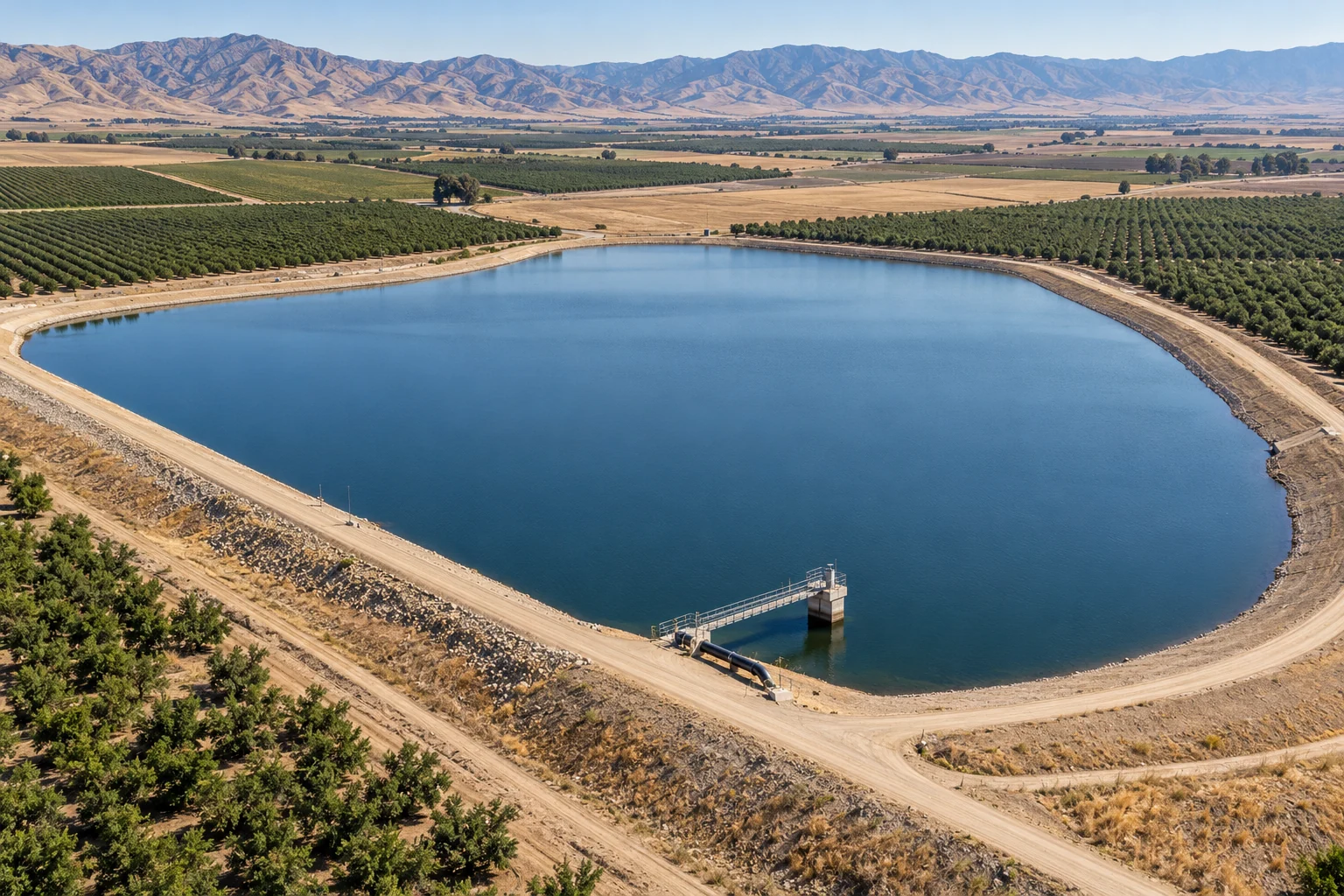
Aerial oblique view across a managed irrigation reservoir with embankment, intake and adjacent orchard blocks
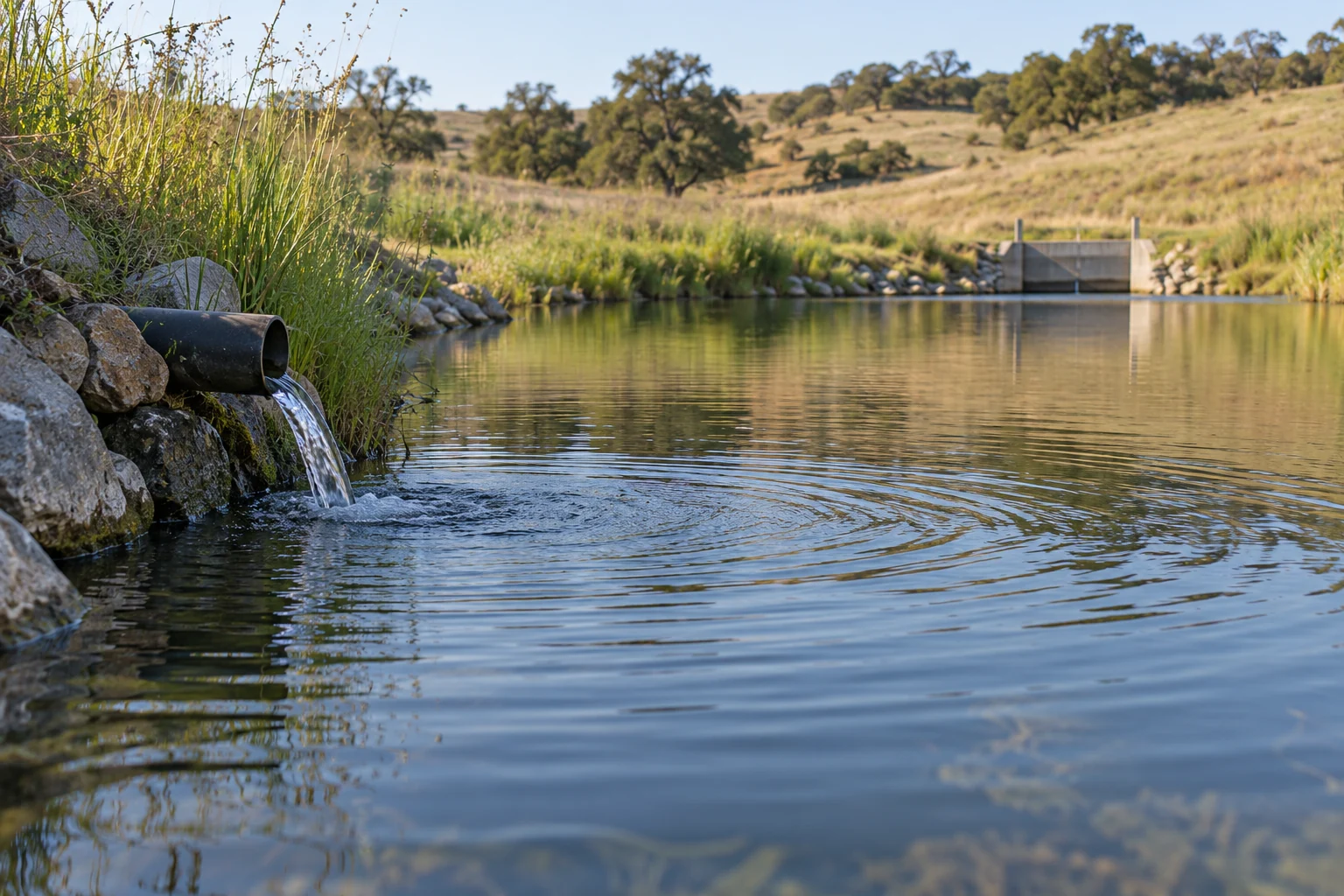
Water entering a managed pond bordered by grasses and trees
A connected water-management program

Manage the water body, not just the symptom.

Agrosource provides treatment design, product specifications, and recommended injection rates. We consider how the stored water is used, what enters the system, and how circulation and aeration affect organic loading and operating conditions. Water movement, incoming loads and intended use all inform the treatment plan.

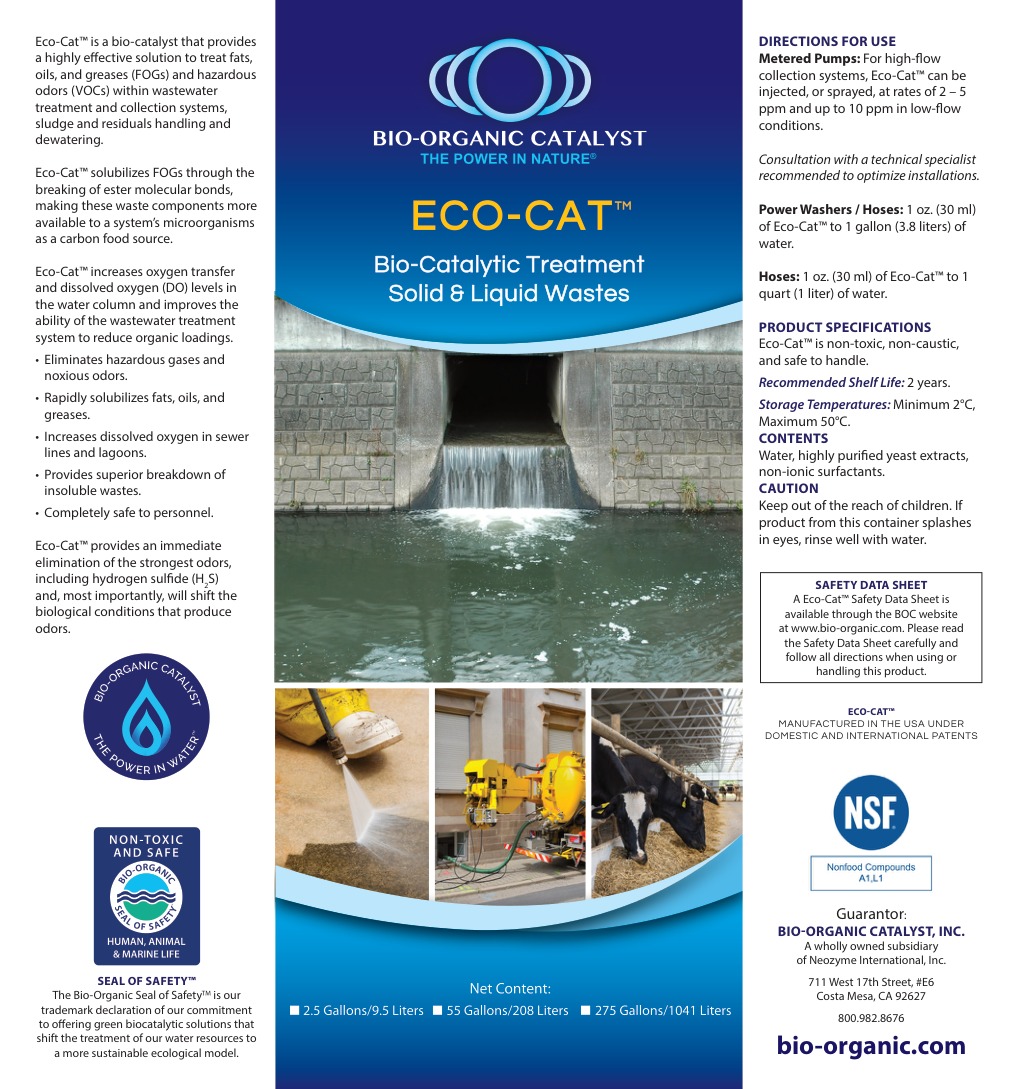
For suitable non-potable ponds and reservoirs, Clear-Cat supports organic-material breakdown to address organic buildup and surface biofilm. Use it alongside aeration and circulation, with the current label, water volume and incoming load guiding treatment.

Explore Clear-Cat and its label

Start with the operating challenge

Define what matters for this water body: its intended use, clarity, organic accumulation or intake maintenance. Review incoming loads, water volume and circulation before choosing treatment, then track relevant measurements and maintenance effort rather than judging success by appearance alone.

Problem & treatment

Water clarity

Cloudy water may reflect suspended organics, algae or mineral sediment. Clear-Cat is formulated for water-body clarity and organic-loading management through biocatalytic action. Identify the source of the cloudiness first; product treatment does not replace control of incoming sediment or nutrients.

Problem & treatment

Organic accumulation

Plant residues and runoff add organic material that accumulates and increases oxygen demand. Clear-Cat supports breakdown of organic molecules as part of a water-body treatment program. Manage incoming loads and bottom deposits alongside aeration and practical solids management.

Problem & treatment

Low-oxygen conditions

High oxygen demand and weak circulation can leave parts of a pond or reservoir short of dissolved oxygen. Clear-Cat supports oxygen transfer alongside aeration. It does not generate oxygen or replace adequate aeration and circulation.

Problem & treatment

Surface fouling

Slime layers and organic deposits can foul wetted surfaces, intake screens and filters. Clear-Cat targets biological film and organic loading to support cleaner water-system surfaces. Diagnose mineral scale and mechanical blockage separately, and retain the appropriate maintenance program.

Measurements and treatment context

BOD, COD and hydrogen sulfide

BOD (biochemical oxygen demand) describes oxygen used by microorganisms as they break down material in a water sample. COD (chemical oxygen demand) measures the oxygen equivalent of material oxidized in a chemical test. These describe oxygen demand, not the dissolved oxygen (DO) available in the water; interpret them alongside flow, solids and operating conditions.

Match treatment to loading and oxygen supply

Clear-Cat is formulated for suitable water-body programs addressing organic loading and surface biofilm. Its label recommends aeration; product selection does not replace equipment sizing, circulation review or DO measurements. Where testing is appropriate, BOD and COD help define the demand that the water-management program needs to address.

Sediment, odors and hydrogen sulfide

Organic sediment and stagnant areas can contribute to oxygen-poor conditions, where hydrogen sulfide (H₂S) may develop. Disturbing affected sediment can release gas. Separate biodegradable material from mineral deposits when defining treatment goals; clearer water or less odor does not establish safe gas levels.

Products matched to the problem

Select each product for its treatment role and follow its current directions. Confirm compatibility before combining products.

Bio-Organic Catalyst
Water-body and water-system conditioning

Clear-Cat

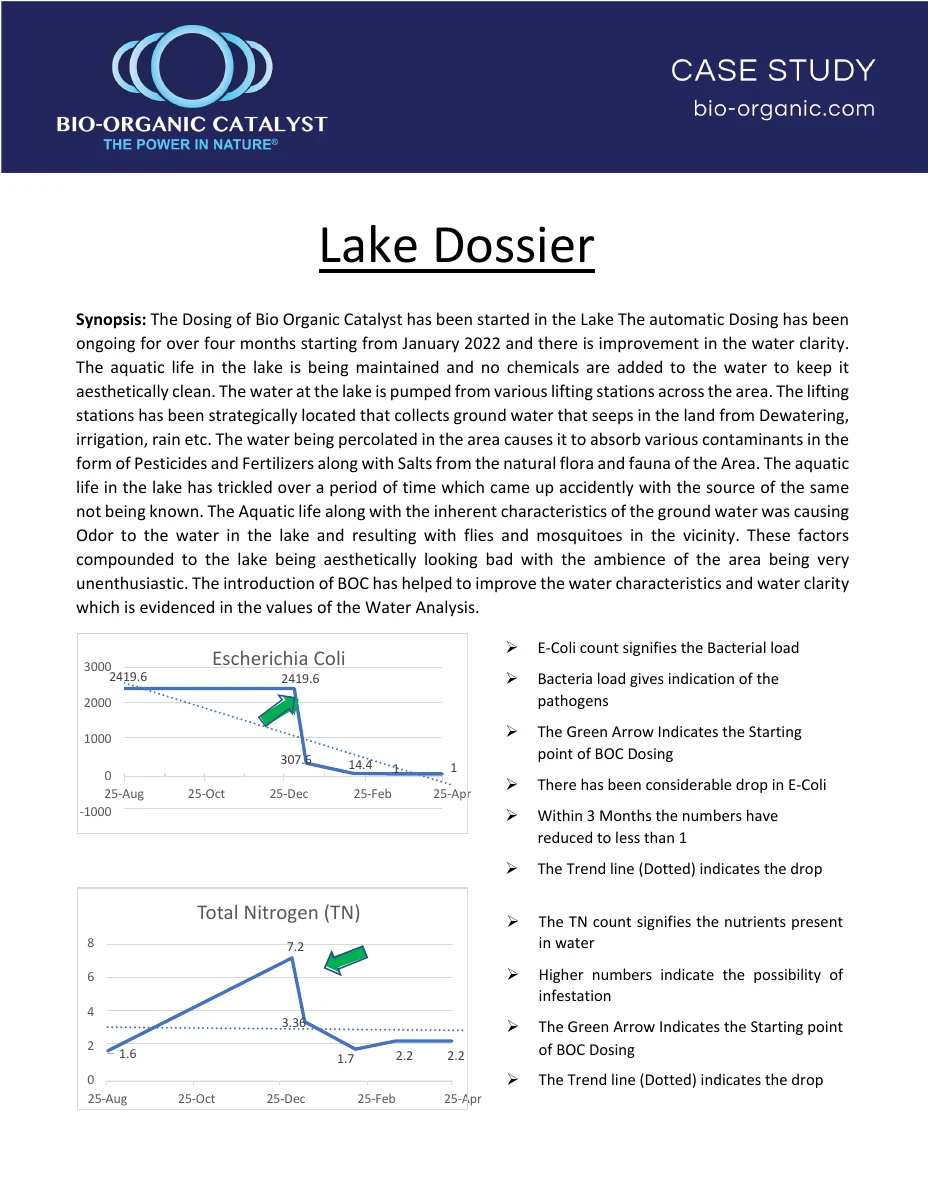
Clear-Cat addresses organic loading, cloudy water and biological surface fouling in suitable non-potable ponds and reservoirs. It supports organic-matter breakdown and oxygen transfer alongside aeration and circulation.

Explore Clear-Cat

Need help matching treatment options to your pond or reservoir?

Ask about pond treatment options

Is this the right application?

Confirm the water body and treatment goal before selecting a program.

  • Confirm suitable non-potable use and the site’s water-use requirements.
  • Identify organic loading and biological surface fouling.
  • Review aeration, circulation and dissolved oxygen.
  • Assess mineral sediment and algae separately.

Clear-Cat treatment does not establish drinking-water safety or pathogen control. Keep operating, safety and water-use requirements in place.

Explore the underlying solutions

Follow the problem to the most relevant technical approach.

Start with your system.

Tell us how the water is used, what enters the pond or reservoir, and which recurring condition you want to address. Available water-quality measurements and equipment details help distinguish a treatment opportunity from a circulation or maintenance need.

Request pond and reservoir information

Video

YouTube’s privacy-enhanced player loads when you open a video. Captions are shown when available.